Bring Your Creative Vision to Life with Disney Stories
In the crowded digital landscape, capturing attention isn't just about what you say; it’s about how you say it. Typography carries the weight of your brand’s voice before a single sentence is read. If you are looking to bridge the gap between professional polish and personal touch, you need a typeface that feels alive. Enter Disney Stories, a handwritten font that transforms standard text into a narrative experience. It isn’t just a set of characters; it is a tool designed to inject playfulness and authenticity into your projects, making it a standout asset for anyone from seasoned designers to passionate hobbyists.
The Personality Behind the Letterforms
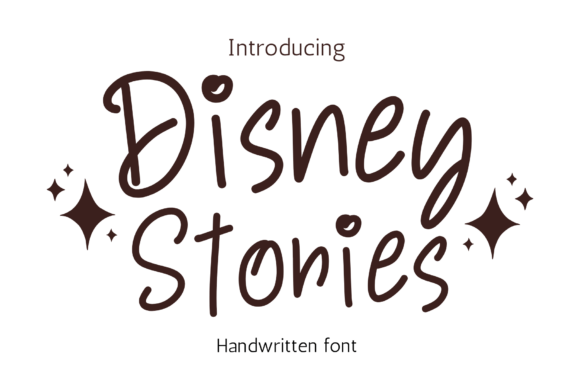
When you first encounter Disney Stories, you notice the fluidity. It mimics the natural rhythm of hand-lettering, capturing the slight imperfections and organic flow that make handwritten text so relatable. Unlike rigid, geometric sans serif fonts, this typeface breathes. It offers a warmth that digital media often lacks. The visual characteristics of Disney Stories are defined by a balanced mix of casual charm and legibility. It avoids the chaotic loops of overly complex script fonts, ensuring that while it looks artistic, it remains functional.
This font embodies a specific style: approachable, whimsical, and trustworthy. It is the visual equivalent of a warm smile or a handwritten note tucked inside a package. For designers, this means you can soften a corporate edge or amplify a creative concept without overhauling your entire design system. It serves as a perfect counterpoint to the clean lines of modern typography, providing a necessary human element in an increasingly automated world.
Where Disney Stories Truly Shines
One of the greatest strengths of a versatile handwritten font like Disney Stories is its adaptability across various mediums. It is not restricted to one niche; rather, it acts as a design chameleon that adapts to the context of your project.
Branding and Logo Design
For entrepreneurs and small business owners, your logo is your handshake. Using Disney Stories in your logo design can instantly position your brand as friendly, creative, and customer-centric. It works exceptionally well for lifestyle brands, boutique shops, bakeries, and creative agencies. When paired with a sturdy sans serif font for body text, Disney Stories becomes the focal point that draws the eye, establishing a memorable brand identity that feels personal rather than corporate.
Digital Marketing and Social Media
On platforms like Instagram or Pinterest, visual hierarchy is everything. Social media graphics need to stop the scroll. Disney Stories works perfectly for overlay text on images, call-to-actions, or promotional banners. Its high-contrast strokes and playful baseline make it ideal for short, punchy headlines. It adds a layer of engagement to your digital marketing that rigid fonts simply cannot achieve, encouraging your audience to pause and interact with your content.
Publishing and Editorial Design
In editorial design, context is king. While you wouldn't use a handwritten font for the body text of a 500-page novel, Disney Stories is a powerhouse for chapter titles, pull quotes, and magazine headers. It breaks up the monotony of standard serif text, guiding the reader's eye and emphasizing key themes. For bloggers, this font is a game-changer for post titles. It signals to the reader that the content is going to be conversational and relatable, setting the tone before they even read the introduction.
Physical Products and Invitations
The utility of Disney Stories extends beautifully into print. Consider packaging design for artisanal goods, or the creation of greeting cards and invitations. Because it mimics authentic hand-lettering, it adds a tactile quality to printed materials. It feels bespoke. Whether you are designing a wedding invitation suite or a label for a homemade candle, this typeface provides that "finished by hand" aesthetic that customers value.
Strategic Typography: Beyond Aesthetics
Choosing a font is a strategic decision, not just an aesthetic one. The typefaces you select influence how your audience perceives your brand's professionalism and values. Disney Stories communicates authenticity. In a market saturated with AI-generated content and stock imagery, using a handwritten font that feels genuine can significantly boost audience engagement.
However, visual hierarchy must be respected. Disney Stories is a display font. Its primary role is to grab attention for headlines, sub-headers, and accents. Using it for long paragraphs would compromise readability. A successful design pairs the personality of Disney Stories with the legibility of a clean serif font or a neutral sans serif font. This contrast creates a dynamic visual rhythm that keeps the viewer interested.
Consistency is also key. Once you integrate Disney Stories into your brand identity, you are making a promise of a specific vibe. Ensure that this playful, authentic tone is reflected in your copywriting and overall marketing strategy. The font should be the visual manifestation of your brand's voice.
Practical Guide to Implementation
As a creative professional, integrating a new asset into your workflow requires a bit of due diligence. Here is how to get the most out of Disney Stories:
- Evaluate the Fit: Before committing, look at the personality of your project. Does it require a serious, authoritative tone? If so, a heavy serif or bold sans serif might be better. If the project calls for warmth, creativity, or a personal touch, Disney Stories is likely the perfect match.
- Test Your Pairings: Good font pairing is about contrast. Try combining Disney Stories with a geometric sans serif like Montserrat or a classic serif like Lora. Ensure the x-heights and weights complement each other so the design feels cohesive rather than disjointed.
- Check the Styles: High-quality fonts often come with stylistic alternates, ligatures, and swashes. Explore the character map of Disney Stories. You might find that swapping out a standard "t" for a stylistic alternate can make your logo or headline look even more custom.
- Mind the Spacing: Handwritten fonts sometimes require manual kerning, especially in large sizes for logos. Check the spacing between letters to ensure the flow feels natural and that letters aren't crashing into one another.
- Licensing Matters: If you are using this for commercial work—whether it’s a client logo, a product for sale, or marketing materials—ensure you have the appropriate commercial font license. This protects you legally and supports the type designers who create these design assets.
Elevating Your Creative Toolkit
Ultimately, Disney Stories is more than just a font; it is a creative catalyst. It allows you to inject personality into planners, photo albums, decorations, and high-stakes web design projects alike. By understanding its strengths—playfulness, authenticity, and versatility—you can use it to create designs that resonate on a human level. Whether you are a seasoned publisher or a hobbyist crafting your first invitation, adding this tool to your arsenal ensures your work feels intentional, polished, and undeniably creative.