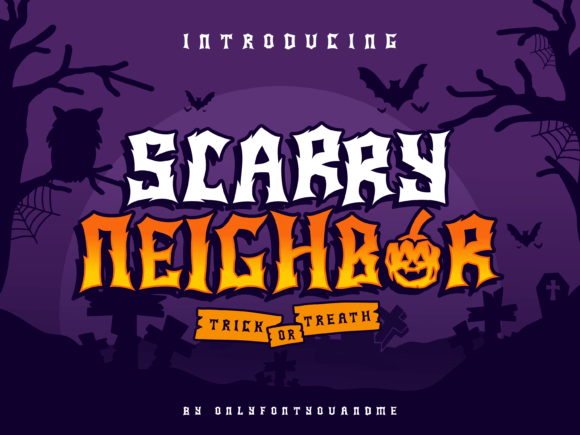
Unleash the Fun Side of Fear with Scary Neighbor
Let's face it, sometimes a project needs a little edge. You want to grab attention, create a sense of excitement, or tap into that playful Halloween spirit all year round. That's where a characterful display font comes in, and few do it with as much personality as Scary Neighbor. This isn't your typical, overly serious horror typeface. Instead, it’s a masterfully designed duo that balances spooky themes with a fun, approachable vibe, making it a surprisingly versatile tool for designers, marketers, and creators.
More Than Just a Scary Typeface
At its core, Scary Neighbor is a premium font package featuring two complementary styles. The primary display font has a distinct, jagged outline that suggests dripping paint or rough-cut wood—think of a classic haunted house sign. The letterforms have a strong, confident structure that ensures legibility even with their decorative edges. This isn't a script font or a handwritten font; it’s a solid, impactful display font built for headlines and logos that need to stand out.
The real magic, however, lies in its companion: a full dingbat font. This set includes a curated collection of thematic icons—bats, skulls, cobwebs, ghosts, and other spooky motifs—that you can use to create borders, patterns, or standalone graphics. Because it's PUA encoded, every single glyph and alternate is easily accessible through your operating system's character map or any design software that supports OpenType features. This gives you creative freedom without needing to hunt for separate graphic assets.
Practical Applications for the Creative Professional
So, where does a font like Scary Neighbor actually work? Its strength lies in projects that aim for a specific, engaging mood. For logo design, it’s perfect for brands in the entertainment, gaming, or event planning space. Imagine a local haunted attraction, a podcast about true crime, or a line of craft beers with a playful edge. The font immediately communicates the brand's personality before a customer even reads the name.
In editorial design and packaging design, it can set the tone for a magazine feature on horror movies, a book cover in the thriller genre, or seasonal product packaging. For web design and social media graphics, it’s a powerhouse for creating eye-catching banners, YouTube thumbnails, or Instagram story templates that stop the scroll. The key is using it strategically. Pair it with a clean, neutral sans serif font for body text to maintain readability. A simple pairing like Scary Neighbor with a font like Montserrat or Open Sans creates a strong visual hierarchy, where the display font commands attention and the body text remains easy to read.
Making the Right Choice for Your Project
Choosing the right creative font is about more than just liking how it looks. It’s about evaluating fit. Before committing to Scary Neighbor, ask yourself a few questions. Does the playful-horror aesthetic align with your project's core message? Is the audience likely to respond to this style? Test it by mocking up a headline or a logo in your design software. See how it feels in context.
Pay close attention to the font pairing. While it pairs beautifully with simple sans serifs, it can also work with certain serif fonts for a more vintage or editorial feel. Experiment with the included dingbats. Can you use a bat icon as a bullet point in a list? Could a cobweb pattern frame a photo? This integrated approach elevates your design from using a font to leveraging a full design asset.
Finally, understand the licensing. As a commercial font, ensure its use covers your intended applications, whether for personal projects, client work, or merchandise like T-shirts and stickers. The value of a well-crafted typeface like Scary Neighbor lies in its ability to bring a unique character to your work, helping to build a memorable brand identity and engage your audience on a deeper, more emotional level. It’s a tool for adding a specific kind of magic—one that’s both thrilling and fun.