Stacked Monogram: Bold Typography for Dynamic Sports Shirts
When you are designing for athletics, you need type that feels like motion. You want letters that look like they are ready to sprint, jump, or tackle. This is where the Stacked Monogram typeface enters the field. It is not just a collection of letters; it is a visual engine built for speed and impact. As a premium font designed with a specific purpose, it solves a problem that many designers face when creating apparel: how to make text look structural, architectural, and powerful all at once.
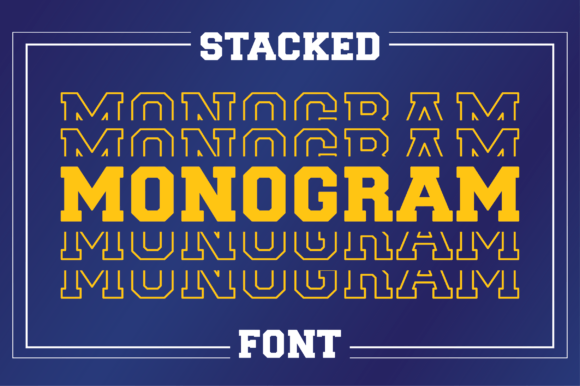
The defining feature of Stacked Monogram is its vertical construction. Unlike standard fonts where letters sit side by side on a baseline, this typeface layers characters. It creates a dense block of text that feels solid and grounded. The visual personality is unmistakably bold. It uses heavy weights and strong lines to create high contrast. You will notice that the negative space is just as important as the strokes. The "line" aspect of the design—often seen in the outlines or the structural underpinnings—gives it a modern, technical edge. It feels less like a traditional serif font or a playful script font, and more like a piece of industrial design.
The Anatomy of a Ready Stacked Font
Understanding the visual mechanics helps you use it effectively. Stacked Monogram typically features a sans serif foundation. The absence of decorative serifs keeps the design clean and legible, which is crucial when you are dealing with overlapping characters. The "bold" component ensures that the font maintains its integrity on textured fabrics like the mesh of a sports jersey or the cotton of a heavy hoodie. If the weight were too light, the stacking effect would become a visual mess where letters become indistinguishable.
The "line" component adds a layer of sophistication. It can act as an outline, giving the letters a hollow, three-dimensional appearance, or it can serve as a graphic separator between the stacked layers. This dual nature—bold fill paired with a linear structure—makes it an incredibly versatile display font. It manages to look aggressive without being messy. For a designer working on brand identity, this balance is gold. You get the energy of a handwritten font’s expressiveness but with the precision of a geometric sans serif.
Why It Dominates the Sports Shirt Market
You might wonder why this specific style is so effective for sports apparel. The answer lies in how we associate shapes with traits. We naturally associate vertical, stacked blocks with strength, stability, and height. When you put Stacked Monogram on a chest or a back, it broadens the visual silhouette of the wearer. It mimics the structure of shoulder pads or the rigid lines of a scoreboard.
However, the utility extends far beyond the playing field. This typeface is a powerful tool for various commercial projects:
- Team Merchandise: Beyond player uniforms, use it for fan gear where legibility from a distance is key.
- Fitness Branding: Gyms and personal trainers can use the font for logos that need to scream "discipline" and "power."
- Streetwear Collections: The urban fashion market loves the stacked aesthetic. It pairs well with oversized silhouettes and minimalist color palettes.
- Esports and Gaming: The technical, bold lines fit perfectly with the futuristic aesthetic of competitive gaming teams.
When you are working on packaging design for athletic supplements or equipment, Stacked Monogram helps create a shelf presence that demands attention. It tells the customer immediately that the product inside is meant for performance.
Strategic Implementation and Font Pairing
Using a display font like Stacked Monogram requires a bit of strategy. Because it is so visually dense, it does not play well with others if you aren't careful. You generally want to avoid pairing it with another bold font or a complex script font. The result would be visual noise.
Instead, look for contrast. A clean, lightweight sans serif font works beautifully as a secondary typeface. Use the stacked font for the headline or the logo mark, and use the simpler sans serif for sub-headlines or body copy. This creates a clear visual hierarchy. The eye is drawn to the bold, stacked structure first, then travels to the supporting text for details.
Consider the context of modern typography. We are seeing a trend toward bold, condensed typefaces in web design and social media graphics. Stacked Monogram fits this trend perfectly. If you are creating a thumbnail for a YouTube video or a header for a landing page, this font ensures that your message is readable even at small sizes or on mobile screens. The high contrast between the bold strokes and the background makes it a strong contender for digital assets where attention spans are short.
Practical Tips for Designers and Creators
If you are a crafter, hobbyist, or small business owner looking to utilize this creative font, here is some practical advice on evaluating the fit for your next project.
- Check the Glyphs: Before buying a commercial font, look at the character map. Does it include numbers? For sports shirts, numbers are often more important than letters. Ensure the numerical design matches the boldness of the alphabet.
- Test for Legibility: Type out the specific words you plan to use. Sometimes, specific letter combinations in stacked fonts can create awkward spacing. You may need to manually adjust the kerning (the space between letters) in your design software to ensure the stack looks even.
- Evaluate the "Line" Style: Does the font come with different styles? Some premium fonts offer a solid version and an outline version. Having both allows you to create layered effects, such as a solid drop shadow behind an outline, which adds depth to your design.
- Licensing for Production: Always verify the license. If you are selling the shirts, you need a license that covers physical end-products. Most reputable foundries offer this, but it is a critical step to avoid legal headaches down the road.
Building a Cohesive Brand Identity
Consistency is the cornerstone of a strong brand identity. When you choose Stacked Monogram for your logo, you are setting a specific tone. You are telling your audience that your brand is structured, energetic, and professional. This font choice should extend to your other design assets.
Use the same weight and style on your invoices, your email headers, and your social media graphics. The repetition of that distinct stacked shape builds recognition. Over time, your audience will associate that visual structure with your business. It becomes a mnemonic device—a visual shortcut to your brand's values.
For example, imagine a local running club. By using Stacked Monogram on their race bibs, finisher medals, and event posters, they create a unified experience. It feels "official" and "serious." This elevates the perceived value of the event, making participants feel like they are part of something significant.
Conclusion
Typography is rarely just about aesthetics; it is about communication. Stacked Monogram communicates strength, order, and modernity. Whether you are designing a varsity jacket for a high school, a logo for a new fitness app, or graphics for a boutique clothing line, this typeface offers a robust solution. It bridges the gap between the raw energy of sports and the refined precision of graphic design. By leveraging its bold lines and stacked structure, you can create designs that don't just sit on the surface but command attention and respect.