Retro Campus: Capturing the Spirit of Vintage School Days
When you are tasked with designing a headline that needs to stop traffic, or a poster that demands to be remembered, a standard sans serif font often falls flat. This is where display typography steps in to save the day. Retro Campus is a striking premium font that doesn't just occupy space on a page; it injects an irresistible sense of exuberance into your creative work. It is a typeface built on the foundation of nostalgia but designed with the sharpness required for modern digital and print landscapes.
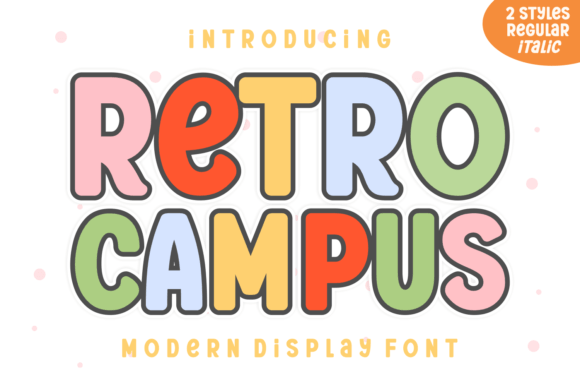
At its core, Retro Campus is a vivacious serif font. However, unlike the stiff, traditional serifs found in academic textbooks, this typeface embraces a frolicsome, stylized aesthetic. The curves are rounded and generous, possessing an inherent boldness that ensures legibility even at smaller sizes, yet it truly shines when scaled up. It carries the visual weight of a vintage varsity letterman jacket but translates it into clean, vector-ready paths. This design choice creates a unique tension between the "old school" and the "new wave," making it a versatile asset for designers who want to evoke the past without looking dated.
Where Vintage Charm Meets Modern Application
Understanding where a specific creative font fits into your workflow is half the battle of design. Retro Campus is not a body text workhorse; it is a specialized tool for impact. Its personality is too loud and proud to be hidden in a paragraph of 12-point text. Instead, it thrives in environments where it can breathe and command attention.
Branding and Logo Design
For entrepreneurs and small business owners, brand identity is everything. If you are launching a brand that values authenticity, community, or a "handmade" feel, Retro Campus is a strong contender for your logo design. It works exceptionally well for:
- Coffee shops and breweries looking for a rustic, established vibe.
- Fitness brands that want to channel the energy of collegiate sports and determination.
- Educational platforms or tutoring services aiming to appear approachable yet authoritative.
- Lifestyle bloggers who want their header text to feel personal and energetic.
The font’s bold nature means it holds up well against busy backgrounds, which is a common challenge in logo design. Whether you are stamping it onto a coffee cup or placing it over a textured background on a website, the thick strokes of Retro Campus maintain their integrity.
Editorial and Packaging Design
In the world of publishing and packaging, the "shelf appeal" is the deciding factor. Imagine a magazine cover or a product box sitting on a retail shelf. You have seconds to make an impression. Retro Campus excels in editorial design as a masthead or pull-quote generator. It provides a dynamic break from the modern typography often used in article bodies.
For packaging design, particularly in the food and beverage industry or artisanal goods, this typeface adds a layer of tactile quality. It suggests that the product inside has a story. It pairs beautifully with textured paper stocks and earthy color palettes, bridging the gap between the digital file and the physical product.
Digital Real Estate: Web and Social Media
The digital space is noisy. On social media platforms like Instagram or Pinterest, users scroll rapidly. A standard font gets ignored, but a creative font like Retro Campus stops the thumb. It is perfect for social media graphics, specifically for sale announcements, event headers, or quote cards. The "joyful finishing touch" mentioned in its design description translates effectively to the screen, where high-contrast, bold text tends to perform better for engagement.
In web design, while you wouldn't use it for your navigation menu, it serves as a powerful H1 or hero text element. It creates an immediate visual hierarchy, drawing the user's eye exactly where you want it before they even process the smaller, more functional text.
The Psychology of the Font: Influence on Perception
Typography is silent communication. The font you choose tells your audience how to feel before they even read the word. Retro Campus influences brand perception by signaling friendliness, energy, and creativity.
Because the typeface is imbued with a "vivacious spirit," it helps soften the corporate edge of a business. If you are a small business owner trying to compete with large, faceless corporations, using a font like Retro Campus can humanize your brand. It suggests that there is a real person behind the screen who values style and personality. It moves a brand identity away from being "clinical" and toward being "communal."
Furthermore, the font’s inherent boldness aids in readability and retention. In marketing, we often talk about "sticky" ideas—concepts that stay in the mind. Sticky ideas need sticky visuals. The stylized curves of Retro Campus make words memorable. When a customer sees a poster using this typeface, they are more likely to remember the visual shape of the words, which reinforces the memory of the offer or event being promoted.
Practical Guide to Using Retro Campus
Adopting a new typeface into your design assets requires more than just installation; it requires strategy. Here is how to get the most out of Retro Campus.
Mastering Font Pairing
One of the biggest mistakes designers make is using a display font for everything. Retro Campus needs a partner that lets it shine. Because Retro Campus is stylized and bold, your secondary font should be quiet and legible.
- With Sans Serif Fonts: A clean, geometric sans serif font (like Montserrat, Futura, or Open Sans) is the perfect counterbalance. The simplicity of the sans serif allows the complex curves of Retro Campus to take center stage without visual clutter.
- With Serif Fonts: If you want a more classic, editorial look, pair it with a transitional serif font (like Garamond or Baskerville) for body text. However, ensure there is a clear size difference to maintain hierarchy.
- Avoid Script Fonts: Generally, avoid pairing Retro Campus with handwritten or script fonts. Both compete for attention, leading to a chaotic layout that lacks direction.
Evaluating Readability and Hierarchy
As a display font, Retro Campus is designed for impact, not for long-form reading. Use it for:
- Headlines and Sub-headers
- Logo Wordmarks
- Call-to-Action buttons (in uppercase)
- Short slogans or taglines
When setting your text, pay attention to tracking (the space between letters). Because Retro Campus has stylized curves, you may need to increase tracking slightly if you are using all-caps to ensure the letters don't merge visually. Conversely, for a tight, punchy look, keeping the default spacing often works best for lowercase settings.
Leveraging the Styles: Regular vs. Italics
The font comes equipped with two specifically crafted styles, and using them effectively adds depth to your layout.
- The Regular Style: This is your workhorse for primary headlines. It stands tall and confident. Use this when you want to make a direct, bold statement.
- The Italics Style: The italics version of Retro Campus isn't just a slanted version of the regular; it captures the "energetic" aspect of the font's personality. It implies motion and speed. Use the italics for sub-headings, callouts, or to emphasize a specific word within a sentence. It adds a layer of sophistication and dynamism that the regular style doesn't have.
Licensing and Commercial Use
For designers, entrepreneurs, and agencies, understanding the licensing of a commercial font is non-negotiable. Retro Campus is a premium font, meaning it is a professional design asset. Before using it in a commercial project—such as a client's logo, a product for sale, or marketing materials—ensure you have the appropriate license.
Most premium fonts offer different tiers:
- Desktop License: For print materials, logos, and physical products.
- Webfont License: Specifically for embedding the font into a website using CSS.
- App/E-Pub License: For embedding in mobile applications or digital publications.
Always review the End User License Agreement (EULA). Using a font like Retro Campus correctly ensures that your brand identity is built on solid legal ground, protecting you and your clients from future copyright issues.
Conclusion
Retro Campus is more than just a collection of vectors; it is a design tool that bridges the gap between the nostalgic past and the dynamic present. Whether you are crafting a brand identity for a new startup, designing a poster for a community event, or curating a social media feed that demands engagement, this typeface offers a reliable way to inject personality and professionalism into your work. By pairing it wisely and using its styles intentionally, you can transform standard text into a memorable visual experience.