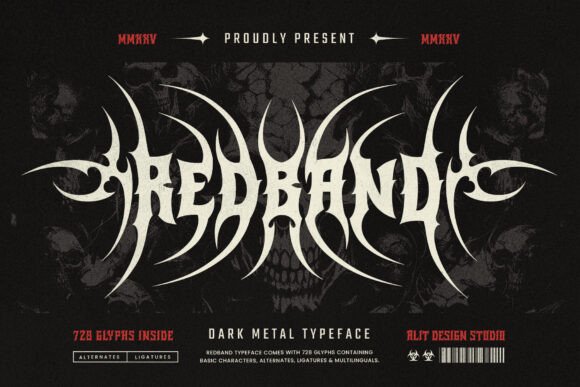
Red Band Typeface: Forging a Bold Brand Identity
There is a specific moment in design when a project demands more than just legibility. It requires a voice—a guttural roar that cuts through the noise of the visual landscape. If you have ever worked on a project for a metal band, a horror anthology, or a high-octane gaming stream, you know that a standard sans serif font simply won’t do. You need something that looks like it was forged in fire and etched into stone. Enter Red Band Typeface, a premium font that doesn’t just sit on the page; it attacks it. This is not a typeface for the faint of heart. It is a weapon for designers who need to inject raw, untamed aggression into their work, bridging the gap between gothic art and modern brand identity.
The Anatomy of Aggression
When we talk about modern typography, we often think of clean lines and geometric precision. Red Band flips that script entirely. Visually, this typeface is defined by its thorn-covered letterforms and razor-sharp tribal swashes. It draws heavy inspiration from the chaotic energy of heavy metal album covers and intricate tattoo art. The letter spacing is tight, creating a dense block of visual weight that feels impenetrable and dominant. It is a display font in the truest sense, designed specifically for headlines, logos, and hero images where the goal is to stop the viewer in their tracks.
The personality of Red Band is unapologetically loud. It speaks of rebellion, dominance, and a refusal to conform. However, beyond the initial shock of its jagged edges, there is a surprising level of craftsmanship. The curves and swashes are balanced to ensure that despite the "chaotic" look, the letters remain distinct enough to form recognizable words. This balance is crucial for logo design. A logo needs to be memorable, and the intricate details of Red Band ensure that once a viewer sees it, they don’t forget it. It transforms simple text into a piece of graphic design art, making it an essential asset in any creative’s toolkit.
Strategic Applications: Where Red Band Dominates
Understanding where to deploy a creative font like Red Band is just as important as the design itself. Because of its high-impact nature, it thrives in environments where visual hierarchy is paramount. It is the perfect candidate for packaging design for energy drinks, hot sauces, or craft beers that want to project an image of intensity and strength. Similarly, in the world of editorial design, it works exceptionally well for magazine covers or article headers related to extreme sports, underground music, or action movies.
For digital applications, Red Band shines in social media graphics and YouTube thumbnails. The digital space is crowded, and you have milliseconds to grab a scroller’s attention. The sharp, tribal aesthetic of Red Band provides that instant visual hook. It is also a powerhouse for web design, specifically for landing pages of gaming tournaments or music festivals. However, a word of caution for the digital realm: because of its intricate style, it is best used for static images rather than small UI elements. When considering commercial font usage, think about merchandise. T-shirts, hoodies, and posters featuring Red Band typography sell a lifestyle, not just a product.
Mastering the Pairing and Hierarchy
One of the most common mistakes designers make with bold typefaces is using them for everything. Red Band is a specialist; it is not a body copy font. To create a professional visual hierarchy, you must pair it with something that can breathe. A clean, geometric sans serif font works best here. The simplicity of the body text will act as a resting place for the eyes, allowing the aggressive nature of Red Band to serve as the focal point without overwhelming the reader.
Imagine a movie poster: the title screams in Red Band, jagged and terrifying, while the credits and tagline sit below in a polite, spaced-out sans serif. This contrast creates tension and balance. When testing font pairings, pay attention to weight. You want a heavy sans serif to match the visual weight of Red Band, so the design doesn't feel top-heavy. This strategy applies to web design as well. Using Red Band for H1 headers on a dark-mode website can create an immersive atmosphere, provided the paragraph text remains highly readable.
Evaluating Fit and Readability
Before you commit to using Red Band for a client project, you need to evaluate the fit. Does the brand voice match the font's personality? If you are designing for a luxury jewelry brand or a pediatric dentist, this is likely the wrong choice. However, if the client deals in streetwear, survival gear, or heavy music, Red Band is the design asset that will elevate their brand identity.
Readability is the other side of the coin. As a display font, legibility at small sizes is sacrificed for stylistic impact. You should never set a paragraph of text in Red Band; it will become an unreadable mess of thorns. Always test your designs at the actual size they will be viewed. If you are designing a billboard, the font will read clearly from a distance. If you are designing a business card, the details might get lost. Practical guidance suggests using this font for short, punchy words—band names, slogans, or single-word headers. This ensures the "fury" of the typography enhances the message rather than obscuring it.
Licensing and Professional Use
Finally, as with any premium font, understanding the licensing is vital for professional work. If you are a freelancer or a small business owner, ensure your license covers the specific scope of the project. For example, if you are using Red Band to create a logo for a client, you typically need a license that permits commercial use and allows the client to use the final logo in their marketing. If you are creating social media graphics or packaging design, verify that the license covers the distribution of the font embedded in those files.
Red Band is more than just a collection of glyphs; it is a statement. It tells the world that the brand behind it is fearless, strong, and unapologetic. By using it strategically—pairing it with the right companions, respecting its readability limits, and deploying it in the right contexts—you can harness its power to create designs that truly unleash the fury.