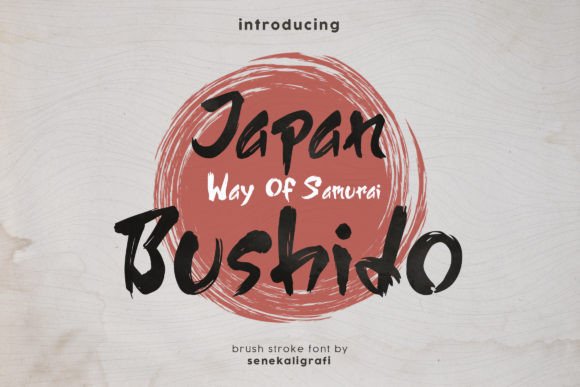
Japan Bushido: A Calligraphic Font for Authentic Branding
Capturing the essence of traditional ink on rice paper in a digital format is no small feat, yet that is exactly where Japan Bushido succeeds. This typeface is more than just a collection of letters; it is a tribute to shodo, the ancient art of Japanese calligraphy. In a market saturated with generic sans serif fonts and predictable script fonts, Japan Bushido offers a raw, organic texture that feels handcrafted. It bridges the gap between cultural heritage and modern design requirements, providing a distinct voice for projects that demand attention without shouting.
Visually, the font possesses a dynamic energy that mimics the flow of a brush held by a skilled master. You can see the pressure variations in the strokes—thick where the brush presses down, and tapering to sharp, delicate points as it lifts. This creates a rhythm on the page that static fonts simply cannot replicate. It is a premium font that functions primarily as a display font. Its personality is bold, artistic, and slightly edgy, making it an ideal choice for headlines, logos, and short bursts of text where impact is the primary goal. It avoids the rigidity of standard typography, favoring instead an expressive, fluid aesthetic that commands the viewer's gaze.
Real-World Applications: From Menus to Movie Titles
The versatility of Japan Bushido lies in its ability to anchor a wide variety of creative projects. For designers working on packaging design, particularly for food and beverage products, this font is a game-changer. Imagine a sushi restaurant menu, a sake bottle label, or a ramen shop banner. Using a standard serif or sans serif font might look clean, but it often lacks soul. Japan Bushido instantly injects authenticity into these designs, suggesting that the product inside is traditional, high-quality, and made with care. It works beautifully on textured backgrounds, such as kraft paper or wood grain, where the brush strokes can interact with the material.
Beyond the culinary world, this creative font shines in the realm of entertainment and media. If you are designing a movie poster for an action film, a video game cover, or a book title for a historical novel, this typeface provides immediate context. It evokes themes of honor, discipline, and intensity. However, its utility isn't limited to strictly "Japanese" themes. In modern typography, mixing styles creates contrast. A designer might pair Japan Bushido with a clean, geometric sans serif for a tech startup’s branding to suggest a blend of tradition and innovation, or use it for a streetwear brand to capture an urban, graffiti-inspired vibe.
For social media graphics and digital marketing, attention spans are short. A handwritten font like Japan Bushido breaks the visual monotony of a newsfeed. It is excellent for quote graphics, promotional banners, and YouTube thumbnails. Because it is a commercial font, marketers can use it to ensure their brand assets remain consistent across different platforms without worrying about licensing issues associated with free fonts. Whether you are a blogger looking to spice up a header image or a small business owner creating flyers, the font adapts to both digital screens and print media with equal grace.
Strategic Typography: Hierarchy, Pairing, and Brand Perception
Choosing a typeface is a strategic decision that influences how an audience perceives a brand. Typography is not just about legibility; it is about psychology. When you use Japan Bushido, you are signaling specific values to your audience: craftsmanship, boldness, and a respect for artistry. This makes it a powerful tool for brand identity. However, because it is a highly stylized script font, it requires careful handling to maintain professionalism.
The most critical aspect of using a display-heavy font like this is visual hierarchy. You should reserve Japan Bushido for headlines, subheadings, or pull quotes. Avoid using it for body text. A large block of brush-style text can become exhausting to read and will hurt your readability metrics. Instead, let the font do the heavy lifting for the "hook" of your content, and then pair it with a highly legible typeface for the details.
Speaking of font pairing, this is where the magic happens. Japan Bushido pairs exceptionally well with neutral sans serif fonts like Roboto, Montserrat, or Open Sans. The simplicity of the sans serif allows the intricate details of the brush font to stand out without competition. It can also work alongside a traditional serif font for a more editorial look, perhaps for a magazine layout or a book cover. When testing your pairings, pay attention to x-heights and weight. You want a balance where the Japan Bushido title feels distinct from the supporting text, creating a clear path for the reader's eye to follow.
Practical Guide to Implementation and Licensing
Before integrating Japan Bushido into your workflow, it is helpful to review the technical aspects of the design assets. A high-quality font family often includes multiple styles or weights. Check if the version you are acquiring includes alternates or ligatures. These features can be incredibly useful in logo design, allowing you to swap out specific letters to prevent repetition or to connect letters in a more natural, handwritten flow. This level of customization ensures that your design looks truly unique rather than a generic template.
Readability testing is another essential step, particularly for web design. While the font looks stunning in high-resolution mockups, you must test how it renders at different sizes on various screens. Brush fonts can sometimes lose their detail on low-resolution mobile devices. Ensure that the font remains legible at the sizes you intend to use. For print projects, such as brochures or posters, print a test page to see how the ink absorbs into the paper, as this can affect the sharpness of the brush edges.
Finally, understand the licensing. Since this is a premium font intended for commercial use, verify the terms of the license. Most licenses cover a specific number of users or devices. If you are an agency or a large team, ensure your license covers all team members who will access the file. If you plan to use the font in a logo that will be trademarked, or on products for sale (like t-shirts or mugs), check that the license permits "embedding" or "merchandising." Respecting these terms protects your business legally and supports the type designers who created this beautiful tool.
Ultimately, Japan Bushido is a typeface that brings a human touch to the digital world. It offers a way to communicate emotion and intensity that rigid geometric fonts often miss. By applying it thoughtfully—respecting its visual weight and pairing it with the right companions—you can elevate your projects from standard to striking. It is a valuable addition to any designer’s library, offering a timeless aesthetic that resonates across cultures and industries.