Sugar Donut: A Playful Font for Fun Designs
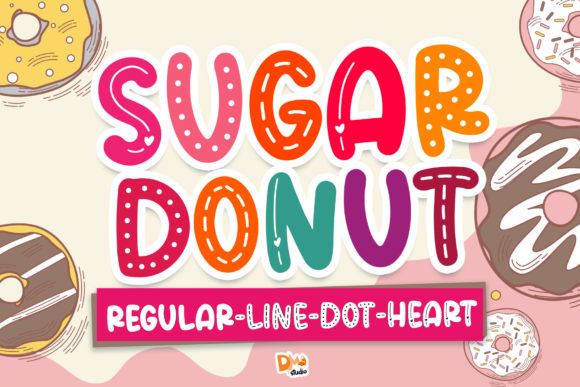
When you're working on a project that needs to feel friendly, approachable, and genuinely fun, the typeface you choose does more heavy lifting than most people realize. A font isn't just a way to display words—it sets the emotional tone before anyone reads a single letter. Sugar Donut is a display font that understands this intuitively. With its chunky letterforms and rounded edges, it radiates warmth and playfulness without trying too hard. It's the kind of typeface that makes a children's activity book cover feel inviting or a school fundraiser poster feel energetic and welcoming.
What makes Sugar Donut stand out in a crowded field of creative fonts? It strikes a balance between whimsy and legibility. Many playful typefaces sacrifice readability for personality, leaving designers frustrated when the text actually needs to communicate something. Sugar Donut avoids that trap. Each character has enough weight and spacing to remain clear at various sizes, while the slightly irregular shapes and soft geometry give it an authentic, hand-drawn quality. It doesn't look corporate or sterile. It looks like something made with care—and that's exactly the feeling many projects need to convey.
Where Sugar Donut Really Shines
Think about the projects where tone matters as much as content. Children's books, educational materials, birthday invitations, kids' party supplies, classroom posters, daycare branding, toy packaging, and craft blog headers all benefit from a typeface that communicates warmth and approachability. Sugar Donut fits naturally into these contexts because its visual personality aligns with what those audiences expect and respond to. The chunky lettering feels tactile, almost like something you could pick up and hold, which gives it an immediate emotional connection that thinner, more austere fonts simply can't replicate.
Beyond children's projects, this font works surprisingly well in broader branding contexts. Small businesses targeting families—bakeries, ice cream shops, family-friendly restaurants, pediatric offices, and children's clothing brands—often struggle to find a typeface that feels professional without being stiff. Sugar Donut offers a solution. It's polished enough to use on a logo design or storefront signage but playful enough to avoid feeling corporate. That duality makes it a versatile addition to any designer's toolkit, especially when working with clients whose brand identity leans toward the friendly and approachable.
Social media graphics are another area where this font earns its place. Instagram posts, Pinterest pins, and Facebook ads all compete for attention in fast-scrolling feeds. A distinctive display font like Sugar Donut can stop a thumb mid-scroll because it looks different from the sea of sans serif and script fonts dominating most feeds. Used for headlines or short callouts, it adds personality without overwhelming the overall design. Pair it with a clean sans serif for body text, and you've got a visual hierarchy that's both functional and eye-catching.
Working With Sugar Donut in Real Projects
Choosing any font for a project involves more than picking something that looks appealing in a preview. You need to consider context, audience, and how the typeface will behave in your specific application. With Sugar Donut, start by thinking about scale. Because it's a display font, it performs best at larger sizes—think headlines, titles, and featured text rather than long paragraphs or fine print. At small sizes, the chunky details that give it character can start to feel crowded, so reserve it for moments where it can breathe.
Font pairing is where many designers either elevate a project or let it fall flat. Sugar Donut pairs well with straightforward sans serif fonts that don't compete for attention. A typeface like Open Sans, Lato, or even a simple geometric sans serif gives your body text the clarity it needs while letting Sugar Donut handle the personality-heavy lifting. Avoid pairing it with other decorative or handwritten fonts—the result usually feels chaotic rather than cohesive. The contrast between playful and structured is what makes the combination work.
Before committing to any premium font, test it thoroughly in your actual design environment. Set real words and phrases you'll actually use, not just the sample text from the font specimen page. Check how it handles special characters, numbers, and punctuation if your project requires them. Review the included styles—some display fonts come with alternates, ligatures, or multiple weights that expand your creative options significantly. Understanding what's included before you start designing prevents mid-project surprises and helps you make the most of the asset.
Licensing, Readability, and Professional Considerations
For anyone using Sugar Donut in commercial work—and that includes freelance designers, small business owners, bloggers monetizing their content, and agencies producing client deliverables—licensing matters. Always verify that your license covers your intended use. Most premium font licenses distinguish between desktop use, web use, and sometimes app or merchandise use. If you're creating packaging design or products for sale, confirm that your license permits that application. It's a small administrative step that protects both you and your client from legal headaches down the road.
Readability testing deserves more attention than it typically gets. Print a sample at the size you plan to use. View it on different screens if it's going on the web. Ask someone unfamiliar with the project to read it and tell you what it says. These simple checks reveal issues that are easy to miss when you're too close to the design. Typography that feels obvious to the creator can be genuinely confusing to a fresh pair of eyes, and catching those problems early saves revision time later.
Sugar Donut also has a role in personal and craft projects that aren't strictly commercial. Scrapbooking, custom party decorations, handmade greeting cards, and DIY wall art all benefit from a typeface with character. If you have a cutting machine like a Cricut or Silhouette, a chunky font like this cuts cleanly because its letterforms have enough weight to handle small-scale production without losing detail. That practical advantage often gets overlooked in font discussions but matters enormously to crafters who work with physical materials.
Building a Versatile Font Library
Every designer, whether professional or hobbyist, eventually builds a collection of go-to typefaces. The strongest libraries include a mix of serif fonts, sans serif fonts, script fonts, and display fonts that cover different moods and contexts. Sugar Donut fills the playful display category with confidence, giving you a reliable option whenever a project calls for warmth, fun, and authenticity. Having that specific tool ready means less time searching and more time creating—which, ultimately, is the point of any good design asset.