Stencil: Where Industrial Strength Meets Digital Intricacy
Finding a typeface that genuinely commands attention without sacrificing clarity is a rare thing. Most display fonts lean heavily into one extreme—either they are too plain to make an impact, or they are so decorative that they become illegible the moment you try to use them in a real design. However, there is a specific niche in modern typography that bridges the gap between structural utility and high-tech aesthetics. If you are looking to inject a sense of futuristic engineering and industrial grit into your next project, the Stencil font pack offers a solution that is both visually arresting and surprisingly versatile.
The Anatomy of a High-Tech Typeface
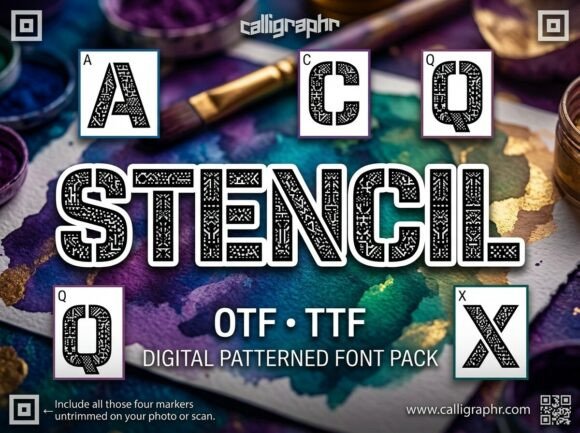
At its core, Stencil reinterprets the classic military spray-shield aesthetic that we have seen on shipping crates and street signs for decades. However, it pushes this concept into the digital age. The typeface features ultra-bold, heavy block characters that feel grounded and stable. You will notice the classic "bridge gaps" that define stencil lettering, slicing through the characters to create that recognizable industrial look. But what makes this creative font stand out is what happens inside those letter envelopes.
Instead of leaving the interior of the letters empty or filling them with a solid color, Stencil fills the space with a complex, high-density matrix. Imagine maze-like circuit lines, micro-geometric textures, and intricate digital pathways woven into the very fabric of the text. It gives the typography a sense of internal architecture. When you look closely, you see a network of fine details that suggest technology, data, and complexity. Yet, step back, and the heavy outer contours ensure the text remains bold and legible. This balance is crucial. It allows you to use the font over complex backgrounds—whether that is a wet-paint watercolor texture, a gritty photograph, or a busy digital canvas—without losing the message.
Practical Applications for Designers and Creators
Understanding the visual personality of Stencil is one thing; knowing where to deploy it is another. Because this is a high-impact display font, it is not suited for body copy or long-form reading. However, for specific applications, it can be the defining element of a design. If you are working in the cyberpunk gaming space, Stencil fits naturally into user interfaces, loading screens, and logo design. The circuit-board internal texture mimics the aesthetics of sci-fi technology, making it perfect for HUDs (heads-up displays) or tech-inspired sticker decals.
For entrepreneurs and brand strategists, this typeface offers a way to position a brand as forward-thinking and robust. Consider using Stencil for a tech startup’s brand identity or a futuristic streetwear label. It works exceptionally well for:
- Apparel Graphics: The heavy block style translates beautifully to screen printing and embroidery on hoodies, caps, and jackets.
- Album Art: For alternative music, electronic, or industrial genres, the font sets an immediate mood of edgy sophistication.
- Editorial Design: Use it for magazine pull quotes or feature headers to grab the reader’s eye immediately.
- Social Media Graphics: In a fast-scrolling environment, the high contrast and unique texture of Stencil stop the thumb.
It is also worth noting its utility in packaging design. If you are designing for a product that emphasizes precision, strength, or modernity—like hardware tools, energy drinks, or tech accessories—Stencil reinforces those attributes instantly.
Mastering Visual Hierarchy and Readability
One of the biggest challenges with intricate fonts is maintaining readability. You want the design to look cool, but if your audience has to squint to read the word, you have failed as a communicator. Stencil solves this through crisp, high-contrast outer contours. The "bones" of the letters are thick and distinct. This means that even though the internal architecture is complex, the silhouette of the word remains clear.
When using Stencil, you are creating a strong focal point. It naturally dominates the visual hierarchy. Because it is so bold and detailed, it pairs best with simpler supporting typefaces. A clean sans serif font or a minimal serif font makes an excellent companion. If you pair Stencil with another decorative or script font, the design will likely become chaotic and difficult to parse. Let Stencil do the heavy lifting for headlines, logos, and key calls to action, and leave the detailed information to a more neutral typeface.
Integration and Licensing: What You Need to Know
Before integrating any premium font into your workflow, a practical evaluation is necessary. First, consider the specific mood of your project. Stencil is unapologetically modern and industrial. If you are designing a wedding invitation or a boutique bakery logo, this is likely not the right fit. However, if the brief calls for "tech," "strength," "future," or "urban," you are in the right territory.
When testing font pairings, create a mock-up early in the process. Place a headline in Stencil and try a few lines of body text in a standard sans serif font like Helvetica or Roboto. You will likely find that the simplicity of the body text highlights the complexity of Stencil, creating a pleasing contrast. Additionally, review the licensing terms. If you are a freelancer or a small business owner, ensure the license covers your specific use case, whether that is for a client’s web design, physical merchandise, or digital social media graphics.
Ultimately, Stencil is more than just a font; it is a design asset that brings a specific intellectual and aesthetic weight to the table. By leveraging its unique internal textures and industrial structure, you can create layouts that feel professional, high-tech, and impossible to ignore. It is a powerful tool for anyone looking to bridge the gap between rugged industrial art and the precision of digital geometry.