London Child: Capturing Childhood's Charm in Every Letter
The Heart of the Typeface: More Than Just a Handwritten Font
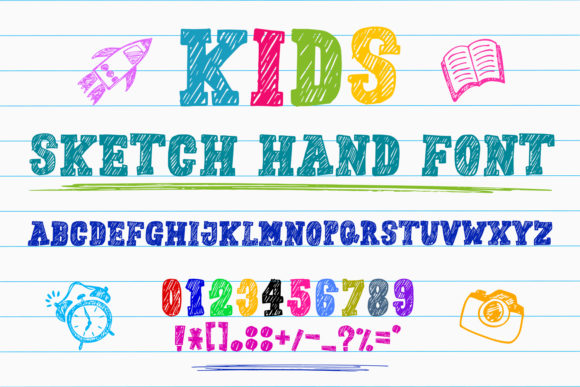
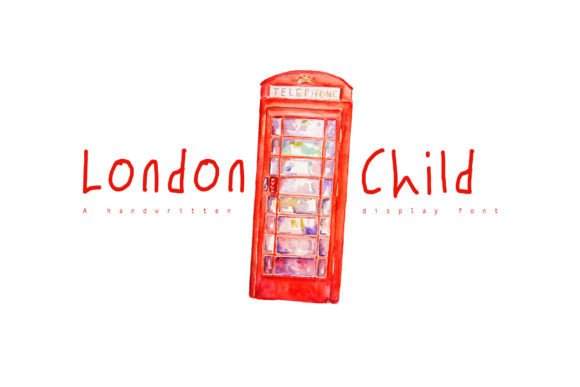
When you first encounter the London Child font, it’s less like looking at a typeface and more like finding a cherished piece of paper from the back of a school drawer. It’s a premium font that steps away from the rigid geometry of a standard sans serif font or the formal elegance of a serif font. Instead, it embraces the raw, unpolished beauty of a child’s first foray into writing. The visual style is defined by its imperfect lines and wavy curves. It avoids the mechanical precision of vector perfection, favoring a spontaneous flow that feels genuinely human.
As a creative font, London Child captures a specific moment in time: the intersection of concentration and joy. The letters don't just sit on the baseline; they dance. Some lean a little to the right, others stand tall, mimicking the way a young hand grips a pen with determination. This isn't just a script font; it is a storytelling device. It brings an immediate sense of innocence and nostalgia to any project, making it an invaluable design asset for anyone looking to evoke warmth. Whether you are working on a brand identity for a family-oriented service or designing a layout for a parenting blog, this typeface communicates a message of carefree creativity and authentic expression.
Strategic Applications: Where London Child Shines
Understanding where to deploy a handwritten font like London Child is key to successful modern typography. Because it is a display font, it is designed to draw attention. It works beautifully in headlines, pull quotes, and logos, but it requires a thoughtful approach when applied to long-form body copy.
In branding and logo design, London Child offers a distinct personality. It is an excellent choice for businesses that want to appear approachable, friendly, and non-intimidating. Think of children’s clothing lines, daycare centers, pediatric dentists, or creative workshops for kids. The font instantly sets a tone that is welcoming. However, for brand identity consistency, it is best paired with a clean, legible sans serif font for supporting text. This font pairing ensures that the playful nature of the headline doesn't compromise the readability of the details.
For publishing and editorial design, this typeface is a gem. It is perfect for children's book illustrations, diary-style entries in magazines, or headers in scrapbooks. In packaging design, particularly for toys, sweets, or educational kits, London Child can differentiate a product on the shelf by suggesting that the contents are fun and engaging. Even in web design and social media graphics, using this font for a call-to-action or a specific highlight can break the monotony of standard web fonts, increasing audience engagement by adding a human touch to the digital experience.
Design Mechanics: Readability and Hierarchy
While London Child is a charming handwriting font, practical application requires an understanding of visual hierarchy. A common mistake with creative fonts is overuse. If you set an entire paragraph in London Child, the "handwritten" nature can become visually fatiguing and difficult to scan. The strength of this typeface lies in its ability to act as a focal point.
To maintain professionalism and readability, use London Child for impact. Use it for the main headline of a poster, the title of an invitation, or a specific quote that needs emotional weight. Then, switch to a highly legible body font—like a geometric sans serif or a humanist serif—to carry the bulk of the information. This contrast creates a dynamic visual hierarchy that guides the reader's eye naturally.
Furthermore, consider the medium. In print design, such as invitations or flyers, the texture of the paper can enhance the tactile feel of the font. On screen, ensure the font size is large enough that the unique characteristics of the letters—the loops and the varying stroke widths—don't blur into an unreadable mess at smaller pixels. When used correctly, London Child doesn't just display words; it enhances the brand perception by adding a layer of emotional resonance that standard corporate fonts often lack.
Practical Guide: Selecting and Implementing London Child
Choosing a commercial font involves more than just aesthetic preference; it requires evaluating the technical and legal fit for your project. Before integrating London Child into your workflow, here are a few practical considerations for designers, entrepreneurs, and content creators.
First, evaluate the project fit. Does the project require a tone of authority and seriousness? If you are designing a legal document or a financial report, London Child is the wrong choice. But if the goal is to connect with an audience on an emotional level—parents, hobbyists, or young consumers—it is a strong contender. It serves as a bridge between playful branding and functional design.
Second, review the included styles and character set. A high-quality premium font often includes alternates, ligatures, or multiple weights. Check if London Child offers variations that allow you to customize the "messiness" or the flow of the text. This can be crucial for creating a brand identity that feels unique rather than generic.
Finally, always test your font pairing. Place London Child next to your chosen body text on a mockup. Look at the x-height and the contrast. Does the handwritten style clash with the body copy, or do they complement each other? By taking the time to test these design assets in context, you ensure that your final product—whether it is a packaging design, a social media campaign, or a web design layout—feels cohesive, intentional, and professionally crafted.